Table of Contents
Introduction

In 2025, the way people discover and choose brands has changed. Social media is louder, attention spans are shorter, and AI is reshaping how we search and shop. The reality is, without a clear digital marketing plan in place, your business risks getting left behind.
Let’s break down what digital marketing really is, why it’s more important , and how a strong digital marketing plan can be the difference between steady growth or staying invisible.
The Digital Game Has Changed
A few years ago, having an online presence was a bonus. Today, it’s a must for survival.
From Instagram Reels to voice search and AI-powered shopping suggestions, the digital world is evolving fast. People don’t sit around waiting for a sales pitch — they explore, compare, and make choices on their own terms.
Modern customers expect more than a basic Facebook page or scattered Instagram posts. They want valuable content, a smooth and responsive website, instant answers, and real, human interaction.
If you’re not building your presence with purpose, your audience may not see you at all.
What is Digital Marketing?
Digital marketing is the use of online platforms and technology to promote your business, connect with potential customers, and build your brand.
A solid digital marketing plan covers a wide range of channels like Search engines (SEO & Google ads), Social media (Instagram, Facebook, LinkedIn, TikTok), Content (blogs, videos, infographics), Email campaigns, Websites and landing pages, Influencer partnerships and Analytics & automation tools.
In simple words: it’s how you attract, engage, and convert your audience online.
Whether it’s a local coffee shop, an online clothing brand, or a software company. Having a digital marketing plan helps people find you, trust you, and buy from you.
Importance of Digital Marketing in 2025
Here’s why digital marketing isn’t just “important” in 2025—it’s essential:
- More people are online than ever (over 5 billion internet users)
- AI and automation are raising the bar for personalized experiences
- Gen Z and millennials expect brands to be active, transparent, and consistent
- With fewer people walking into physical stores, your online presence has become your main way to attract and engage customers
- People search and compare online before making decisions—even for local businesses
Digital marketing gives every business, big or small, a chance to grow in a competitive world. It creates a situation where everyone has an equal chance of success. A smart solo entrepreneur can compete with bigger brands by being faster, more personal, and more strategic online.
You Can’t Just “Post and Pray” Anymore
Let’s be real—just dropping random posts on social media and crossing your fingers won’t cut it anymore.
Too many businesses waste time on:
- Inconsistent content
- Poorly targeted ads
- No data tracking
- No clear messaging or goals
They end up frustrated, saying “We tried social media. It didn’t work.”
But the truth is—it’s not social media that failed. It’s the lack of strategy. Without a solid plan, your content and marketing feel disorganized and fail to make an impact. You’re reacting instead of leading.
No plan = No growth.
In 2025, you need more than just “being active.” You need a digital marketing plan with purpose and structure.
Why Your Business Needs a Digital Marketing Plan
A digital marketing plan gives your company a clear course. It assists you in determining your objectives, how to get there, and what blunders to avoid.
Having a digital marketing plan makes your marketing:
- Goal-driven: Every action you take advances your primary goals.
- Consistent: Your brand appears consistently through all appropriate channels.
- Trackable: You can observe what is effective and where changes need to be made.
- Efficient: By avoiding guesswork and trial and error, you develop more quickly.
For example:
If your target is to get 50 leads each month, your plan will guide how many ads to run, what kind of content to post, and what emails to send. Instead of random efforts, every action is calculated and intentional.
Benefits of a Strong Digital Marketing Plan
Here’s what a well-structured digital marketing plan can offer:
- Precise Targeting – Connect with the people who actually need your product or service
- Better ROI – Spend less, convert more
- Stronger Branding – Be recognizable, trustworthy, and memorable
- Live Data Feedback – Track outcomes instantly and make smarter moves
- Faster Growth – Attract more leads, nurture them, and turn them into loyal customers
It’s not about doing more—it’s about focusing on what truly drives results.
Example: A local gym that puts effort into an engaging Instagram Reels strategy and gathers strong Google reviews can outperform a larger gym that runs random, unplanned offers.
With a plan, you’re not just reacting to trends—you’re setting them.
What Should Be in Your 2025 Digital Marketing Plan?
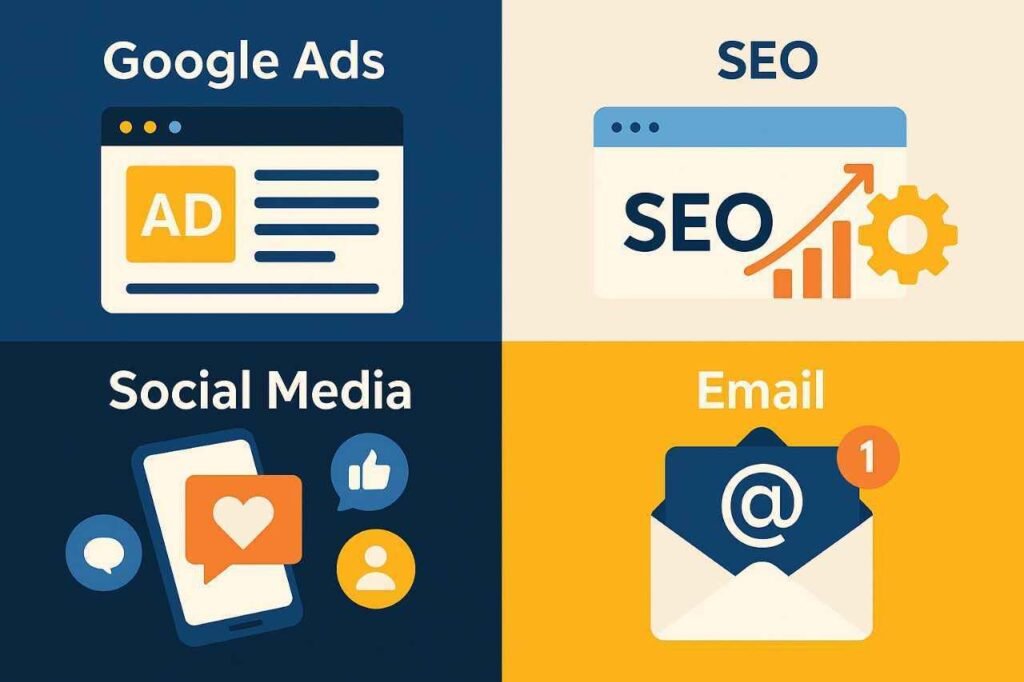
Your digital marketing plan for 2025 should include:
1. Clear Goals
What are you trying to achieve?
Brand awareness?
More leads?
Website traffic?
E-commerce sales?
Define your KPIs early so you can measure success clearly.
2. Target Audience Research
Know who you’re talking to and where they hang out online.
Understand their age, interests, problems, and buying behaviors.
Tip : Use tools like Google Trends, Facebook Audience Insights, and surveys to learn more about your audience.
3. SEO Strategy
Search Engine Optimization is still king.
Focus on AI-friendly content, mobile SEO, voice search, local SEO (if you serve local areas)
Ranking on Google means people find you while they’re looking for help—that’s powerful.
4. Content Plan
Plan and schedule your content ahead of time.
Mix formats like blogs, reels, YouTube shorts, infographics, case studies etc.
Each piece should either educate, entertain, or convert.
5. Social Media Strategy
Choose platforms based on your niche.
- LinkedIn for B2B
- Instagram for lifestyle/visual brands
- TikTok for younger audiences
- Facebook for community/local businesses
Set content pillars and keep branding consistent.
6. Paid Advertising
Use paid ads to increase your reach.
Try:
- Google Search Ads for buyers ready to purchase
- Meta ads for retargeting and awareness
- YouTube Ads or influencer collabs for storytelling
- Set budgets and test different formats (video vs. image, short copy vs. long copy).
7. Email Marketing + Automation
Email is still powerful when used the right way.
You can use it to connect with leads, send offers, share value, re-engage old customers.
Use tools like hubspot, convertkit, or mailchimp to automate processes like reminders for abandoned carts or welcome emails.
8. Analytics & KPIs
Use tools like Google Analytics, Meta Pixel, and Hotjar to measure what’s working.
Track things like:
- Website visits
- Conversions
- Click-through rates
- Cost-per-click
- Sales attribution
Make data-driven decisions instead of guessing.
9. Mobile-First UX
By 2025, smartphones are expected to generate over 70% of all website traffic.
Your site should load in 3 seconds or less, have big clickable buttons, display clearly on all screen sizes and avoid overwhelming visitors with too many pop-ups. If your site works flawlessly, visitors are more likely to stay longer and interact with your content.
Use google’s mobile friendly tools like pagespeed insights to check performance.
What Happens If You Don’t Have a Plan?
Let’s keep it real—this is what’s waiting for businesses without a digital marketing plan:
- Wasted ad spend on the wrong audience
- Inconsistent branding that confuses customers
- Slow or no growth because efforts are scattered
- Falling behind as competitors dominate your space
- Burnout from trying to do too much without direction
Example: You run a great ad, but your website loads too slowly on mobile—so people bounce.
That’s money gone—and no sale made.
The market isn’t waiting. Either you show up strategically—or you disappear.
Conclusion
2025 is the Year to Get Serious
If you want 2025 to be the year you finally grow, get noticed, and build something real—a digital marketing plan is non-negotiable. The tools are available. The audience is online. The opportunities are massive. You don’t need a massive budget to compete—you just need a smart, focused plan. Begin with the basics, show up consistently, and keep evolving along the way.
Start with a monthly content calendar
Set small goals
Track your numbers
Improve with every campaign
Your future customers are out there.
The real question is—will they come to you, or someone else who showed up better?